Gaming 360: Your Gateway to the Modern Gaming Universe
Gaming 360 – Modern Gaming Platform: Overview and Value Proposition
Gaming 360 – Modern Gaming Platform: Overview and Value Proposition is designed to describe a comprehensive system that positions the platform as a living, evolving hub where players, developers, and communities come together to explore, create, and compete across genres, devices, and ecosystems; it emphasizes seamless continuity, shared standards, and collaborative opportunity as the foundation for a more dynamic and inclusive modern gaming universe. The platform rests on a core philosophy: to remove barriers between gaming experiences by providing a single sign-on, unified progress tracking, and a consistent set of services that travel with the user from desktop to console to mobile and into the realm of virtual reality where supported; by consolidating multiplayer lobbies, matchmaking, live event orchestration, and content discovery under one umbrella, Gaming 360 reduces fragmentation and empowers studios of all sizes to reach broad audiences without sacrificing control over IP, monetization, or narrative intent. It also emphasizes accessibility and performance, ensuring players with varying hardware footprints can enjoy high‑quality graphics, smooth real‑time interactions, and immersive environments thanks to cloud‑based rendering, edge computing, and adaptive streaming that scales with demand. In practice, this approach translates into an ecosystem where cross‑platform gaming, social integration, and personalized content recommendations work in harmony to create a more engaging, inclusive, and durable gaming experience, while robust analytics and developer tooling provide the data‑driven feedback loops needed to iterate quickly. The value proposition goes beyond features, inviting communities to contribute, creators to publish with confidence, and players to influence the direction of their beloved franchises through user‑generated content, official creator programs, and transparent collaboration channels, all under a framework that prioritizes security, privacy, fair play, IP protection, and sustainable growth through continuous updates and an evolving roadmap.
What is Gaming 360?
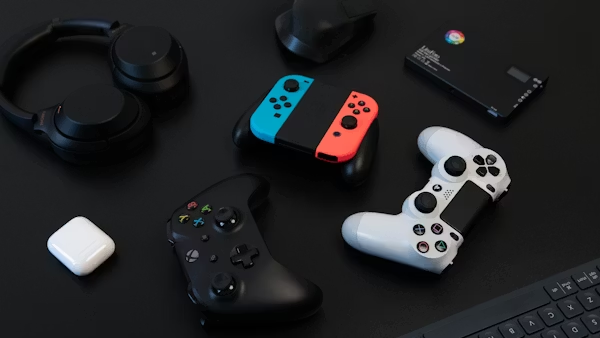
Gaming 360 redefines what a gaming platform can be by uniting a wide spectrum of experiences under a single umbrella: social play, competitive events, expansive libraries, and developer tooling designed to streamline creation and deployment. At its heart, the platform acts as a gateway rather than a gatekeeper, enabling players to move fluidly between titles, modes, and devices while retaining progress, rewards, and identity across environments—an approach similar to how ecosystems such as NV Casino focus on seamless user journeys across platforms.
The architecture emphasizes cross-platform synchronization, so a match won on a console can influence a player’s standing on a PC, while a mobile companion app can deliver companion content, live event updates, and in-game rewards that propagate back into the main game world. For developers, Gaming 360 offers a modular toolkit that reduces redundancy, a cloud-based backend capable of scaling from indie launches to large-scale releases with tens of thousands of concurrent users, and analytics that illuminate player behavior, content performance, and monetization potential in real time.
This combination lowers risk for publishers and creators, accelerates time to market, and expands the reach of titles through integrated discovery mechanisms, social surfaces, and official support for streaming and esports integrations. The platform also prioritizes accessibility and inclusivity through comprehensive accessibility features, privacy safeguards, and moderation pipelines that balance open expression with community safety.
By standardizing core services—matchmaking, telemetry, user profiles, achievements, and content delivery—Gaming 360 creates a consistent, reliable baseline that teams can leverage while still preserving creative control and IP integrity. The result is a modern gaming experience that feels cohesive across genres, devices, and player demographics, where advanced graphics and realistic physics can coexist with intuitive interfaces, low entry barriers, and robust parental controls. In short, Gaming 360 is designed to be as welcoming to newcomers as it is empowering for veterans, offering a future-proof foundation that supports experimentation, collaboration, and long-term engagement.
Key benefits for players and developers
The following points summarize why players and developers alike choose Gaming 360.
- Unified cross‑platform access across PC, console, and mobile devices through a single login and shared progression, enabling players to switch devices without losing their in‑game status or rewards.
- Rich, interactive content and tailor-made storytelling experiences across genres with direct player involvement in community‑driven narratives and creator‑led events that deepen engagement.
- Advanced social features, live spectating, real‑time matchups, and official e‑sports integration allow players to build communities, rival competitors, and monetize spectator experiences within sanctioned tournaments.
- Powerful developer tools, analytics dashboards, and flexible monetization options help studios test ideas quickly, optimize live ops, and align revenue with player satisfaction and long‑term retention.
- Cross‑platform workflows and cloud‑based infrastructure minimize hosting friction, reduce operational costs, and enable rapid deployment, rollback, and scaling to meet spikes in demand during launches and events.
These benefits extend beyond feature checklists into everyday gameplay, community-building, and profitable development pipelines. Together, these benefits create a virtuous cycle of engagement, discovery, and sustainable growth.
Personalized gaming profiles and recommendations
Players can curate their profiles with customizable avatars, preferred genres, and activity feeds that highlight recent achievements, friends’ activity, and recommended titles based on play history, community trends, and in‑game behavior. The recommendations engine respects privacy settings and allows opt‑in features for experimental suggestions, ensuring that content surfaces align with user interests without overwhelming them with noise. Profiles are portable across devices, with progress, inventory, and achievements syncing through the cloud, so players feel a continuous sense of ownership. Performance dashboards offer insights into time spent, skill progression, and retry loops, while privacy controls enable players to fine‑tune what information is visible to friends and public surfaces.
Developer tools, analytics, and monetization options
Developers gain access to modular SDKs, cloud‑hosted backends, and telemetry dashboards that reveal how players interact with content, where drop‑off occurs, and which features drive retention. An integrated A/B testing framework allows teams to compare pricing, tutorials, difficulty curves, and in‑game events without lengthy redeployments. Revenue options include direct sales, microtransactions with optional cross‑title bundles, ad‑funded modes, and a transparent revenue sharing model that rewards ongoing engagement rather than one‑time purchases. A merchant API simplifies storefront integration, while live‑ops tooling supports season passes, timed events, and dynamic pricing. The result is a more predictable revenue stream, faster iteration cycles, and stronger alignment between player satisfaction and monetization strategies.
Seamless social and community features
Social surfaces knit players together through in‑game chat, voice channels, guilds, friend recommendations, and shared content feeds that surface user‑made clips, guides, and tutorials. Creator studios and moderation tools give players avenues to publish, moderate, and monetize community content while maintaining safety and quality standards. The platform supports cross‑title communities that can collaborate on events, challenges, and co‑op experiences, with cross‑platform invites and uniform moderation policies that keep behavior consistent across devices. Feedback mechanisms, surveys, and structured community spaces help developers hear early signals from players and quickly adjust content strategy.
How Gaming 360 fits into the modern gaming ecosystem
Gaming 360 sits at the center of a thriving ecosystem by articulating clear relationships with hardware manufacturers, console ecosystems, PC storefronts, streaming platforms, cloud providers, and esports organizers. The platform emphasizes open integration points through standardized APIs, robust developer tooling, and partnerships that extend reach without diluting control over IP or player experience. It supports cross‑platform stores and storefronts, enabling publishers to publish once and distribute across a network of channels while preserving brand integrity and revenue sharing terms. In practice, this means collaborations with major platform holders for optimized matchmaking, cross‑title progression, and unified achievements, as well as cloud‑gaming arrangements that reduce hardware dependency and broaden access. The ecosystem strategy also prioritizes live operations, event programming, and creator ecosystems that sustain ongoing engagement, including official broadcasting partnerships, leaderboard systems, and branded tournaments. By aligning with cloud infrastructure, analytics providers, and content distribution networks, Gaming 360 facilitates scalable experiences from indie launches to blockbuster releases, while maintaining a user‑first focus on privacy, safety, and fair play. The result is a resilient, adaptable environment where developers can innovate rapidly, players enjoy consistent quality across devices, and communities thrive on shared achievement and collaboration.
User testimonials and case studies
Across studios of all sizes, Gaming 360 has demonstrated tangible outcomes that reflect its value proposition. The following table captures representative results from recent deployments, illustrating the platform’s impact on reach, engagement, and monetization.
| Case | Partner | Context | Impact |
|---|---|---|---|
| Indie Studio Nova | Self-published PC/Console title | Bootstrapped launch with streaming support | DAU up 40%, time-to-market reduced by 25% |
| Mid-tier Publisher Flux | Launch across PC, console, and cloud | Coordinated live ops and events | Retention improved by 18%, revenue per user up 12% |
| Esports Platform Pulse | Event partner for major tournaments | Integrated spectator tools and on-site streaming | Concurrent viewers up 24%, sponsorship revenue up 15% |
These case studies illustrate how a unified platform approach translates into measurable outcomes across genres, geographies, and business models.

Core Features, Benefits, and Competitive Differentiators
Gaming 360 redefines how players discover, access, and enjoy games in a connected universe. From online multiplayer experiences to immersive storytelling, the platform blends cross-platform play, cloud-based services, and personalized profiles into a single, cohesive ecosystem. Players can expect high quality graphics across devices, flexible hardware requirements, and seamless social features that make it feel like a real gaming community. The platform emphasizes competitive play through organized e-sports tournaments, real-time leaderboards, and robust matchmaking, while still delivering welcoming entry points for casual gamers. By design, Gaming 360 supports cloud streaming, VR experiences, and dynamic game customization to adapt to evolving trends in modern gaming.
Feature highlights: What sets Gaming 360 apart
Gaming 360 delivers a curated blend of features that address how players actually play today.
- Unified cross‑platform gameplay that lets friends connect and compete across PC, console, and mobile, ensuring a seamless experience without the friction of ecosystem boundaries.
- Advanced rendering and scalable quality options deliver high‑quality graphics from modest laptops to cutting‑edge rigs, adapting detail, lighting, and resolution to your hardware in real time.
- Real‑time social gaming integration brings friends lists, chat, and live co‑op coordination into every session with low latency and robust privacy controls.
- Immersive virtual reality gaming and cloud‑based streaming offer flexible participation, letting players step into immersive worlds without hardware bottlenecks or long download times.
- Rich, dynamic game customization options—from interface themes to in‑game loadouts—empower players to personalize experiences, reflecting style, strategy, and performance preferences.
- Comprehensive e‑sports support with official leagues, match-making fairness, coaching resources, and analytics helps both aspiring pros and community organizers grow competitive ecosystems.
These features work together to support casual play, aspirational competition, and developer innovation across devices and genres.
Competitive analysis vs major platforms
Below is a concise competitive snapshot that highlights how Gaming 360 stacks up against major platforms in core features, pricing, and market positioning.
| Platform | Core Features | Pricing | Cross-Platform | VR Support | E-sports/Competitive | Cloud Gaming |
|---|---|---|---|---|---|---|
| Gaming 360 | 360 Gaming platform with cross-platform multiplayer, VR, social integration, personalized profiles, and interactive content | Freemium with optional premium tier | Yes across PC, consoles, and mobile | Full support | Official leagues and tournaments | Cloud-based services |
| PlayStation Network | PlayStation social features, exclusive titles, party chat | Paid subscription-based model | Limited cross-platform by title | VR compatible with PS VR | Occasional tournaments tied to publishers | Cloud saves and streaming |
| Xbox Live | Ecosystem integration, cross-play, Game Pass synergy | Subscription and game purchases | Yes across ecosystem | Limited | Large community tournaments via publishers | Cloud gaming via xCloud |
| Steam | PC-first library, community content, workshop integration | Per game purchases, frequent sales | Primarily PC | Steam VR | Community leagues and tournaments | Steam Cloud |
The table focuses on accessibility, cross platform play, cloud support, and tournament readiness to guide users and buyers.
Benefits for different user groups (casual, pro, devs)
Gaming 360 is designed with three primary user groups in mind: casual players who value accessibility and social fun; professional players who demand high performance, precise visibility into their metrics, and substantial competitive infrastructure; and developers who seek powerful tools to build, distribute, and monetize content within a vibrant ecosystem. Casual players benefit from simple onboarding, intuitive UI, and fast matchmaking that minimizes time to play. The platform offers approachable tutorials, easy-to-navigate menus, and social features such as clubs and activity feeds that help newcomers join in seconds. Personalized recommendations based on play history, mood, and community trends help casual gamers discover titles aligned with their interests, while cloud streaming and adaptive performance reduce hardware barriers and enable participation on a wide range of devices. For many casual users, curated events and community challenges provide regular, low-pressure opportunities to engage with friends and discover new experiences. For pros, Gaming 360 delivers reliability and depth: advanced analytics, precise matchmaking, transparent ladder systems, and robust anti‑cheat measures that keep competitions fair and actionable. Spectator modes, coaching resources, and real-time statistics empower teams to study performances and refine strategies, while official brackets and standardized environments streamline tournament operations. Across devices, cross‑platform competition expands the pool of opponents and practice opportunities, and cloud replay features enable rapid review of past matches for improvement. Monetization options and consistent performance across devices give pros a stable, predictable ecosystem for training and competition. For developers, a robust toolset includes documented APIs, SDKs, and a thriving marketplace for modules and assets. The content pipeline supports modular design, dynamic difficulty, and scalable builds suitable for both indie studios and large teams. Cloud-based builds and testing environments shorten iteration cycles, while analytics dashboards and in‑app purchase hooks support sustainable revenue. A flexible modding framework and workshop integration invites community contributions, extending a game’s lifespan and fostering ongoing innovation. In sum, Gaming 360 aims to balance ease of use with depth, social immersion with competitive rigor, and creator opportunity with fair access—delivering a modern gaming experience that resonates across audiences.
Platform Specifications, Performance, and Compatibility
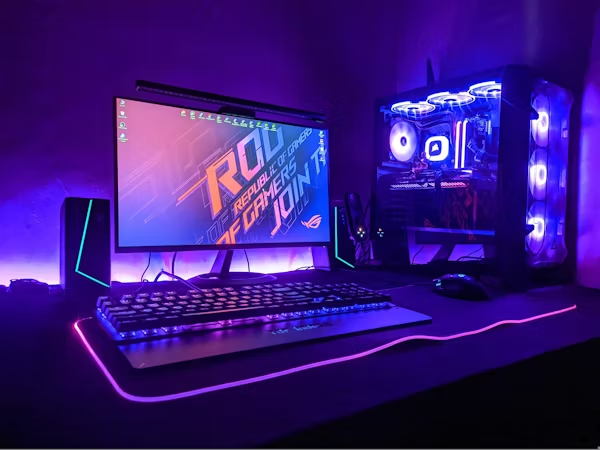
Platform Specifications, Performance, and Compatibility on Gaming 360 underpin a cohesive modern gaming experience that scales from casual sessions on mobile to marathon matchmaking for esports, uniting a 360 Gaming platform ethos with the realities of online multiplayer games, cross platform play, and immersive worlds built around high quality graphics, responsive interactions, and the potential of cloud based services to reduce entry barriers while expanding creative possibilities for players and developers alike. We ensure seamless performance through a layered architecture that blends microservices, edge compute, and centralized data stores, leveraging rapid prototyping and resilient deployment patterns to support real time collaboration, dynamic matchmaking, secure authentication, and live event streaming while maintaining a consistent user experience across platforms with minimal latency. Content delivery embraces a distributed CDN strategy, adaptive streaming, and asset prefetching, orchestrated by a service mesh that optimizes telemetry, fault tolerance, and configuration drift, enabling high fidelity graphics and smooth storytelling in both interactive gaming content and narrative driven titles. The compatibility framework maps across operating systems, consoles, head mounted displays, and mobile devices, with a rigorous compatibility matrix that tracks cross platform progress, save data portability, input method mapping, and feature parity so players can transition between devices without re configuring controls or losing progress. In practice, the Gaming 360 ecosystem blends cutting edge technology with a community oriented approach, highlighting social gaming integration, personalized gaming profiles, and cloud based gaming services that empower competitors, casual players, and content creators to participate in a shared modern gaming universe while maintaining security, accessibility, and a sustainable velocity of updates.
System architecture and backend technologies
Gaming 360 utilizes a modular microservices architecture organized around bounded contexts such as user accounts, matchmaking, gameplay state, social features, telemetry, and content delivery, enabling independent scaling, resilient failure modes, and clearer ownership across engineering teams. The backend services are implemented using a mix of Go for high throughput networked components, Rust for latency sensitive subsystems, and Node.js or TypeScript for rapid iteration in edge services, all orchestrated behind a robust API gateway that routes REST, GraphQL, and gRPC traffic with strict rate limiting and security controls. Data stores combine relational and NoSQL options, including PostgreSQL for transactional data, Redis for in memory caching and session state, and wide column stores like Cassandra for telemetry and event history, complemented by Elasticsearch for search capabilities. Messaging and event processing rely on Kafka or a managed equivalent for durable queues, with backpressure handling and idempotent processing to ensure correctness under high concurrency. The platform uses a multi region, multi cloud deployment model spanning AWS, Google Cloud, and Azure, with region specific data residency considerations and cross region replication to reduce latency for players around the world. Containerization with Docker and orchestration via Kubernetes, plus a service mesh like Istio or Linkerd, provides observable traffic control, secure mTLS communication, and fine grained traffic shaping for canary deployments and rapid rollback. Observability is built in from day one with OpenTelemetry instrumentation, Prometheus metrics, Grafana dashboards, and centralized log aggregation, enabling proactive incident response, capacity planning, and data driven feature delivery. Security and compliance are integrated into the stack through OAuth or SSO, TLS mutual authentication, signed tokens, anti cheat measures, and data governance that supports privacy regulations, auditing, and secure data sharing with trusted partners. The backend also supports feature flags, experiment frameworks, and CI/CD pipelines that automate deployments, tests, and blue green rollouts, reducing risk while enabling rapid iteration across the platform. For data integrity and scalability, we implement eventual consistency where appropriate, with strong consistency for critical systems such as authentication and billing, using transactional outbox patterns and atomic writes to minimize data loss in failure scenarios. We also leverage edge computing for latency sensitive tasks, domain driven design principles to define bounded contexts, and continuous improvement practices that balance performance, reliability, and developer velocity. The architecture favors backward compatibility and clear migration paths, while embracing modern security practices, automated testing, and robust disaster recovery plans to protect player progress and trust in the Gaming 360 ecosystem.
Performance benchmarks and scalability
To provide a comprehensive picture of performance under real world conditions, the platform has undergone extensive benchmarking that spans graphics, compute, networking, and streaming components, correlating synthetic metrics with actual gameplay experiences across a spectrum of hardware configurations and network environments, from modest laptops to high end desktops and from wired connections to congested wireless. This methodology ensures that performance benchmarks translate into actionable guidance for developers and players alike, illustrating how the platform preserves a modern gaming experience even when sessions peak, regional traffic surges occur, or matchmaking workloads fluctuate.
- GPU throughput across modern architectures was benchmarked with ray tracing, shader pipelines, and compute workloads, ensuring sustained frame rates during graphically intense scenes on typical enthusiast hardware configurations.
- Network latency and jitter were evaluated under peak multiplayer activity, with dedicated test farms simulating regional routes, CDN performance, and edge server handoffs to model real-time responsiveness.
- Scalability tests modeled concurrent players per region, dynamic matchmaking, cross-platform session continuity, and geographic failover, assessing how backend services orchestrate resources to maintain consistent service levels.
- Memory management and streaming pipelines were evaluated for footprint, cache hit rates, and texture streaming bandwidth, ensuring smooth transitions during loading, level changes, and on the fly content updates.
- Cross region data replication, failover latency, and synchronized user state were tested under maintenance windows and simulated outages to guarantee continuity for competitive shooters and MOBA leagues.
- Telemetry pipelines collected client frames, input latency, session durations, and error rates, feeding AI driven optimizations that prioritize player perceived quality across hardware configurations.
The results demonstrate robust scalability patterns, with autoscaling policies and container orchestration adjusting compute, memory, and network resources in near real time as regional demand shifts, maintaining stable latency budgets and consistent frame rates during concurrent player spikes, competitive events, cross region matchmaking workloads, and dynamic content delivery, highlighting the platform’s ability to adapt to diverse audience sizes without compromising reliability. Additionally these benchmarks guide future optimizations for telemetry driven analytics, enabling developers to fine tune prefetching, deterministic loading sequences, and adaptive streaming quality, ensuring a seamless modern gaming experience across the 360 Gaming platform whether players engage in online multiplayer games, explore immersive single player stories, or compete in esports tournaments.
Supported devices, platforms, and compatibility matrix
Gaming 360 supports a broad set of devices and platforms to fulfill the goal of cross platform gaming and a modern gaming experience, including desktop operating systems, major consoles, mobile devices, and immersive head mounted displays, ensuring that features such as compatible control schemes, saved games, and social integration remain consistent regardless of where players choose to play. On desktop, Windows 10 and 11, macOS, and mainstream Linux distributions are supported with a focus on keyboard and mouse fidelity, controller support, and accessibility options such as adjustable UI scale and high contrast modes, enabling both casual players and pros to enjoy comfortable input and navigation. Console support spans PlayStation 5, PlayStation 4, Xbox Series X and S, and Xbox One, with ongoing efforts to keep feature parity across generations while leveraging each platform’s optimal libraries for graphics, input, and ecosystem integration. Mobile platforms cover iOS and Android devices with responsive interfaces, adaptable texture and control schemes, and energy efficient modes that preserve battery life during long sessions. Cross platform play is enabled through standardized account linking, cross progression, and shared ecosystems for purchases and cosmetics, so players can switch between devices without losing personal investments or progress. VR and AR experiences are supported via compatible headsets and standard streaming pipelines to deliver immersive gameplay while preserving performance budgets and maintaining synchronization with non VR play sessions. Cloud gaming and streaming are integrated to extend reach to devices that lack local horsepower, with low latency streaming, adaptive quality, and seamless fallbacks to offline modes where possible. Interoperability notes include data portability, privacy controls, and platform specific requirements that rely on a clearly defined compatibility matrix, ensuring developers can plan safe migration, feature rollouts, and bug fixes across the ecosystem. Overall, Gaming 360 emphasizes a pragmatic approach to compatibility that balances breadth of support with depth of integration, enabling a rich, cohesive experience for players and developers alike. Documentation and developer tools accompany the compatibility efforts, including clear API contracts, sample integration code, and automated tests that verify platform behavior in realistic scenarios such as session handoffs, input remapping, and cloud save restoration. As new hardware and software releases occur, the ecosystem prioritizes backward compatibility and graceful degradation, ensuring older devices can still access core features while newer devices can unlock advanced capabilities such as higher resolutions, complex shader effects, and expanded social experiences. Community feedback loops, beta programs, and structured release trains help keep the compatibility matrix accurate and up to date, reducing friction for players upgrading platforms and encouraging sustained engagement across the gaming community. In practice, the matrix informs certification pipelines for developers, guides QA testing across configurations, and underpins customer support workflows when platform specific issues arise. Interoperability considerations also cover cross network play and cloud based identity linking, ensuring that friends lists, achievements, and matchmaking preferences persist across devices, while security and consent controls help protect player data. To maintain a healthy ecosystem, the platform also audits external dependencies, standardizes telemetry schemas, and synchronizes data models across services so that analytics, reporting, and in game economies remain coherent on all supported devices. Additionally, the compatibility program documents edge cases such as latency sensitive input when switching networks mid session, bandwidth throttling scenarios, and the behavior of virtual reality transports when multi user scenes are active. Ultimately the goal is to deliver a seamless cross platform experience where players can enjoy interactive content, large scale online multiplayer events, and personalized communities with minimal friction and maximum reliability. The platform maintains a robust deprecation policy so that older APIs remain accessible during transition periods, giving developers time to migrate while preserving user experience and data integrity. Support for cloud saves and cross device inventory synchronization further enhances continuity, allowing gamers to pick up right where they left off across PC, console, and mobile. We also support accessibility features such as narration, captioning, and alternative input methods to ensure an inclusive gaming universe that welcomes players with diverse needs. Our compatibility matrix is continuously enriched by telemetry-driven insights and user research, enabling us to fine tune the balance between broad device coverage and depth of feature support. This ongoing process ensures that Gaming 360 remains a forward looking platform that evolves with hardware innovations while preserving a stable, enjoyable experience for existing players.
Pricing, Plans, Offers, and Best Value
Gaming 360 offers pricing structures built to fit a wide range of players, from casual explorers to competitive teams, all designed to deliver a modern gaming experience without friction and to scale with your evolving needs as you expand into cross‑platform play and immersive communities.
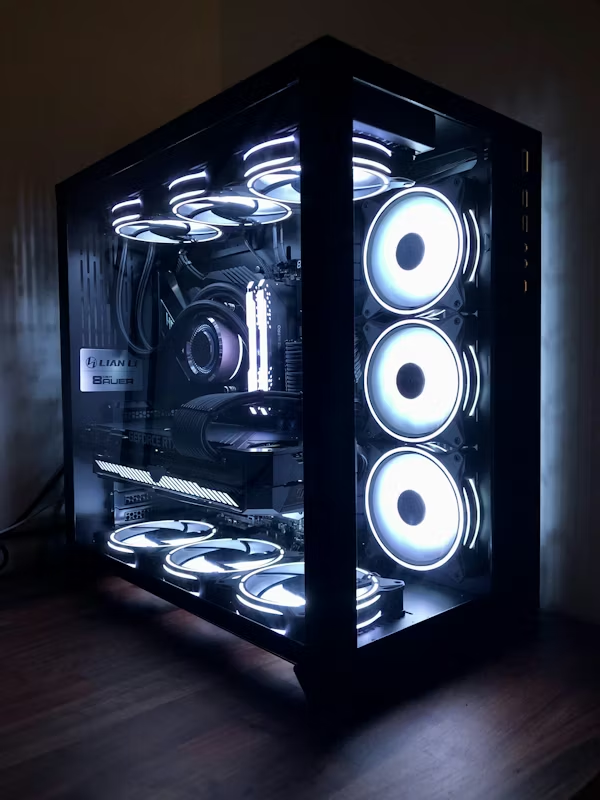
Our plans provide cross‑platform access, fast cloud saves, high‑quality graphics, and robust online multiplayer integration, ensuring a consistent experience whether you game on PC, console, or mobile while staying connected to the Gaming community.
With transparent billing, flexible upgrades, and occasional promotions, you can find an option that aligns with how often you play, how much content you want access to, and how deeply you engage with live events such as e-sports tournaments.
This section guides you through the subscription tiers, current offers, and practical guidance to choose the plan that delivers the best value for your individual or family setup, without locking you into overpayment for unused features.
By balancing features like cross‑platform gaming, cloud storage, personalized gaming profiles, and access to interactive content with price and hardware compatibility, you can maximize your return on investment while enjoying a seamless, social, and dynamic modern gaming universe.
Subscription tiers and what they include
Gaming 360 structures its subscription lineup around three core tiers—Essential, Pro, and Elite—each designed to scale with your engagement level, device set, and how deeply you want to participate in the broader Gaming 360 ecosystem. At the heart of the offering is the modern gaming experience: cross‑platform progress that stays in sync, cloud storage that travels with you, and a consistent, high‑quality presentation that respects the capabilities of PC, console, and mobile environments. The tiers are built to accommodate solo players who value reliability, households sharing devices, and teams that rely on smooth online multiplayer, immersive storytelling, and dynamic game customization options. By integrating personalized gaming profiles and social features with robust parental controls where needed, Gaming 360 turns a simple purchase into ongoing access to a thriving gaming community. Whether you start with a lean base and upgrade, or jump into Pro or Elite, you’ll notice how the platform’s design prioritizes seamless transitions and real‑time interactions.
Starter/Essential includes core features to unlock the essential online multiplayer experience across platforms, a personalized gaming profile, cloud saves, and standard streaming quality. For a modest monthly price, Essential users gain access to a curated catalog of online multiplayer titles, tools to manage friends lists and cross‑play invitations, and the ability to pick up where you left off on different devices. You’ll receive standard support and regular updates, with participation in community events and in‑game challenges that contribute to your standing within the Gaming community. The goal here is reliability and value for lighter usage, with enough social and interactive content to keep engagement steady without overwhelming your budget.
Pro builds on Essential by offering faster access to new releases, higher rendering options, and better compatibility with high‑end devices. It adds expanded cloud storage and longer retention for saved games, plus early access to beta programs and exclusive interactive content. Pro subscribers often enjoy priority entry to select events, stronger matchmaking, and tools that simplify account management across platforms. Cross‑platform progression remains a central pillar, with easier setup for friends lists, invites, and shared progress across ecosystems, so you can grow a team without fighting against hardware gaps. This tier suits committed players who want a richer media experience and more opportunities to connect with the larger community.
Elite targets power users, teams, and players who want the fullest Gaming 360 experience. Elite emphasizes premium graphics support where available, reduced latency for online play, and optional VR or immersive modes that integrate with live events and social features. Elite subscribers get the most generous cloud storage, the earliest access to new titles and modes, and direct access to dedicated support. They also gain access to advanced analytics that help tailor loadouts, track engagement, and optimize performance across profiles and communities. In addition, Elite participants often secure entry to exclusive e-sports tournaments, expanded event calendars, and leadership opportunities that deepen involvement in the Gaming 360 ecosystem.
Upgrading and downgrading are simple and prorated, with no long-term lock‑ins. You can test features with monthly terms or take advantage of annual plans for a better effective price, then switch if your usage shifts. Billing is transparent with clear line items, and you can manage family or group accounts under a single plan to balance cost and usage while maintaining the flexibility to adjust as your gaming priorities change.

Special offers, discounts, and bundles
Gaming 360 runs regular promotions, seasonal discounts, and bundles designed to reward continued engagement. These offers appear throughout the year, with special price points for annual commitments and limited-time bundles that pair subscriptions with in‑game content, early access passes, or partner perks. The goal is to deliver meaningful value without compromising the quality of the core platform experience, so you can enjoy online multiplayer, interactive content, and cross‑platform play at a favorable cost.
Welcome bundles provide a friendly entry path for new members. Typically, these promotions reduce the first‑month rate or offer a discount on the first quarter, plus exclusive avatar skins or customization options that let you personalize your profile as you begin your journey across the Gaming 360 universe. These bundles help you test features like concurrent play, friend discovery, and live events while keeping initial expenses predictable.
There are also targeted discounts for students, educators, and families. Valid IDs or proof of affiliation can unlock reduced pricing for a period of time, enabling households to stretch budgets further while maintaining access to a broad catalog of titles and community activities. Seasonal campaigns may pair price reductions with bundles that include hardware add‑ons or premium DLC packs, expanding the range of experiences you can access under one plan.
For hardware bundles and partner promotions, you’ll see bundled offers that combine a subscription with accessories or peripherals. These limited-time packages can include controllers, headsets, or VR accessories, giving you a holistic upgrade that aligns with the plan you choose while simplifying the setup and reducing total ownership costs. Redeeming these offers is straightforward within the Billing Center, and terms readers should check for eligibility windows or regional availability before purchasing.
To redeem any offer, simply navigate to the Offers page, review the terms, and apply the discount at checkout. Promotional pricing is typically tied to fixed renewal periods, and you’ll see an updated price on your plan during the next renewal cycle. While promotions are generous, they’re designed to complement core value rather than create illusions of unlimited savings, so always compare the long‑term cost against the benefits you actually receive.
Choosing the best plan for your needs
Choosing the right Gaming 360 plan starts with a clear assessment of your gaming habits, device setup, and social goals within the community. Start by listing the titles you play most often, your average weekly playtime, and whether you rely on cross‑platform multiplayer or VR experiences. Consider hardware constraints, such as whether your setup supports high‑quality graphics or needs cloud streaming, and factor in how many devices you want to use under a single account. Finally, weigh how important early access, exclusive events, and analytics are to your enjoyment and progression.
For casual players who mainly want reliable online multiplayer and social features, Essential is typically the most cost-efficient choice, offering the core catalog, cloud saves, and cross‑platform play without unnecessary extras. If you value early access, richer media, and more robust account management, Pro provides a powerful middle ground that balances price with capability and community access. For families or groups with intensive play and who crave the best possible match quality, latency, or VR immersion, Elite delivers the most comprehensive package.
Esports competitors, content creators, and streamers should prioritize plans that maximize latency performance, analytics, and event access, along with optional partnerships or sponsorships that come with Elite. In all cases, Gaming 360 supports flexible upgrades and downgrades, so you can test features during a trial period or a short term cycle and then adjust if your usage shifts. A practical approach is to start with a monthly plan, monitor your engagement over the first 30 days, and then lock in an annual price if you’re satisfied with the value you’re receiving. This method helps you balance risk and reward while capturing the best long‑term deals when you’re ready to grow.
Ultimately, the best plan aligns with how you play, where you play, and who you play with, ensuring that the features you care about—cross‑platform gaming, personalized profiles, interactive content, and community access—match your budget and aspirations without compromise.